





95% of First-Time Diamond Buyers Make These 3 Mistakes
Key Takeaways
- 3 common mistakes first-time diamond buyers make are:Choosing low-quality diamonds just because they are cheap.Buying diamonds without official customs clearance and sales contracts guaranteeing the liquidity and value of the diamond.Buying diamonds...

3 common mistakes first-time diamond buyers make are:
- Choosing low-quality diamonds just because they are cheap.
- Buying diamonds without official customs clearance and sales contracts guaranteeing the liquidity and value of the diamond.
- Buying diamonds without GIA certification.
Many people think that buying a diamond just needs to be "eye-catching" and within budget. But in reality, quite a few customers regret their purchase after spending money because the diamond they chose did not retain its value as expected, was difficult to trade in, or even lacked full international certification standards.
Especially for first-time buyers, a lack of knowledge can easily lead to emotional decisions – choosing based on sparkle, believing unusually low prices, or overlooking important factors that determine the true value of the diamond.
Understanding these concerns, Jemmia will help you identify in detail the 3 most common mistakes when buying diamonds to make the right choice from the beginning, worthy of ownership value, and long-term peace of mind.
3 Common Mistakes First-Time Diamond Buyers Make
Mistake 1: Choosing Low-Quality Diamonds Just Because They Are Cheap
Choosing low-quality diamonds just because they are cheap is the most common mistake of first-time buyers.
Many customers are attracted to large carat diamonds that are significantly lower than market prices. However, low prices often come with low 4Cs quality or structural flaws that directly affect the beauty and value of the stone.
In diamonds, the 4Cs standard includes:
- Carat (weight)
- Color
- Clarity
- Cut
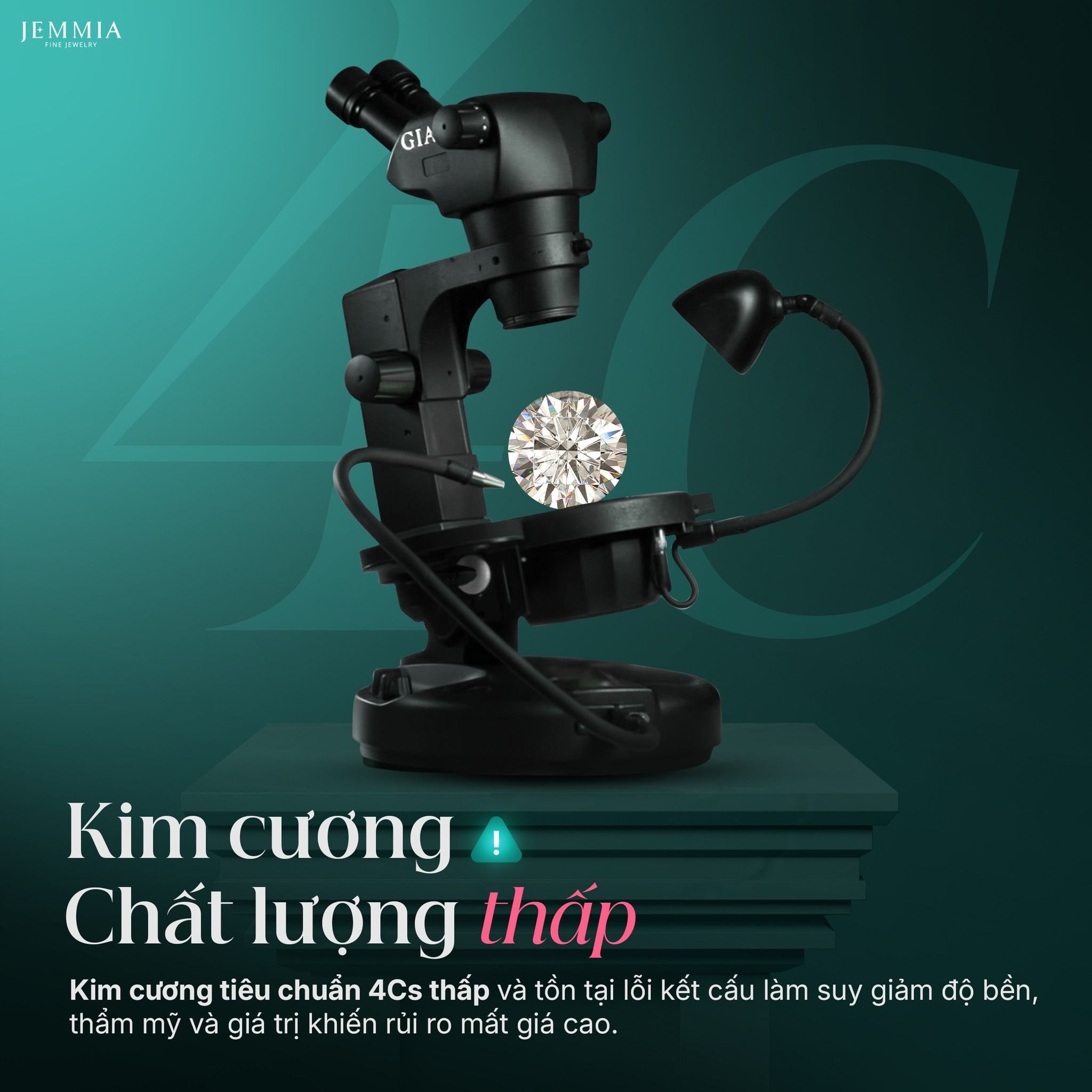
A large carat diamond is not necessarily beautiful if its 4Cs quality is low or it has internal structural flaws
If these factors are low, the diamond will easily appear dull, lack light reflection, not create a clear sparkle effect, and quickly lose value over time.
In particular, a poor cut is the reason why many diamonds, despite their large size, do not feel luxurious when worn.
In addition to aesthetics, low-quality diamonds or those with structural flaws also carry risks for durability and future liquidity.
A diamond that is truly worth the money is not the largest one within the budget, but the one with good light quality, balanced proportions, and long-term value retention.
Mistake 2: Buying Diamonds Without Official Customs Clearance Documents
Many people only care about the diamond itself and forget that official customs clearance documents and GIA certificates are the two most important documents guaranteeing the value of the diamond.
A diamond lacking invoices, sales contracts, or clear tax documents will face many risks later on:
- Difficult to verify origin, easy to buy blood diamonds.
- Lack of legal basis for transactions.
- Sharp decrease in value when reselling.
- May encounter difficulties in trade-ins.
In the diamond industry, transparency is extremely important. A reputable dealer not only sells products but must also provide full official customs clearance, VAT documents, and proof of the customer's asset value.
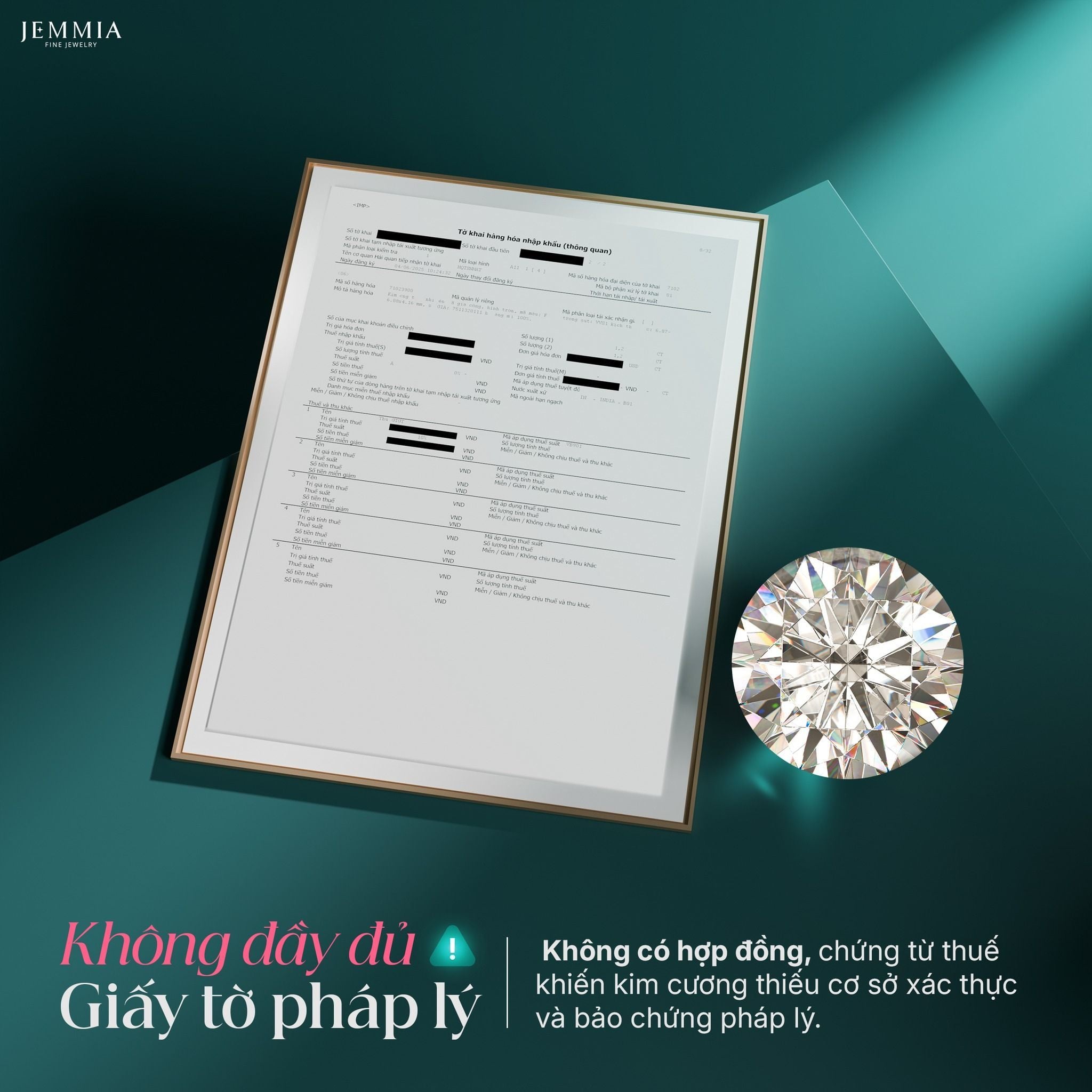
Lack of invoices, tax documents, or clear contracts makes the diamond lack a basis for verification, difficult to trade in, and prone to depreciation when resold.
In the resale market, diamonds without complete documentation are often undervalued or take longer to sell due to the lack of a basis for verifying their actual quality and origin.
Especially for high-value diamonds, complete legal documents also help ensure long-term rights and increase liquidity in the market.
Therefore, before buying, customers should check carefully:
- Sales invoices
- Tax documents
- Origin information
- Trade-in policy
- Warranty policy
These are factors that many people overlook when focusing only on the initial selling price.
📞 Contact us immediately at 0838 353 333 or Zalo Jemmia Diamond to have a diamond expert advise you on a product that suits your needs and budget.
Mistake 3: Buying Diamonds Without GIA Certification
Many people think that a diamond just needs to look beautiful. But in reality, without GIA certification, buyers have almost no accurate basis to determine the true quality of the stone.
GIA (Gemological Institute of America) is the world's leading reputable diamond grading organization. GIA certificates help transparently verify important parameters such as:
- Carat
- Color
- Clarity
- Cut quality
- Fluorescence
- Proportions
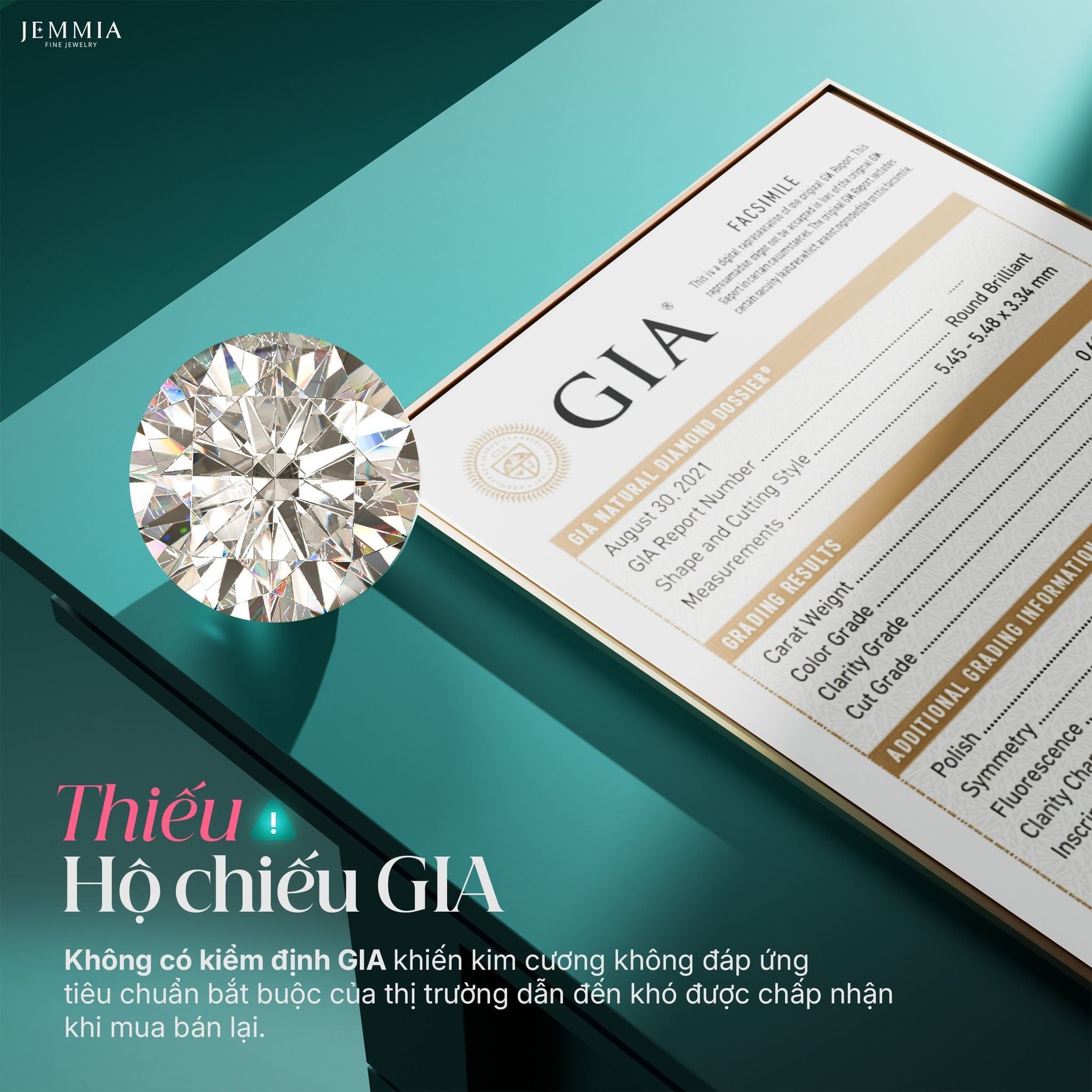
A diamond lacking GIA certification is not only difficult to resell but also carries the risk of deviation from its actual quality.
A diamond without a GIA report is often difficult for the market to accept when reselling, especially in the high-value segment.
According to a resale analysis from Grand Diamonds, a GIA diamond worth $4,500 can be resold for approximately $1,850 – equivalent to about 41% of the original purchase price. Meanwhile, uncertified diamonds or those with less reputable certifications are often valued significantly lower due to the lack of a basis for quality verification.
More dangerously, many uncertified diamonds may have their actual quality misrepresented compared to the initial consultation. Inexperienced buyers find it difficult to assess them with the naked eye.
In reality, diamonds with a "GIA passport" always have greater advantages in terms of:
- Transparency
- Market value
- Liquidity
- Future trade-in potential
However, it should also be understood that GIA is a foundation for quality verification, not the sole factor determining beauty. A truly beautiful diamond still needs to have good light reflection and create a striking impression when viewed in person.
How to Buy Diamonds to Avoid Depreciation?
When choosing to buy diamonds, the most important thing is not to find the cheapest seller, but to find a diamond with true value within the budget.
Buyers should prioritize:
- Diamonds with good 4Cs quality
- Transparent GIA certification
- Complete legal documents
- Clear trade-in policies
- A reputable and long-standing seller with expertise
Because in the end, the true value of a diamond lies not only in its size or sparkling appearance, but in its ability to retain its beauty, value, and provide peace of mind throughout the ownership period.


