






Diamond Terms Not Everyone Knows?
Key Takeaways
- Diamonds are not only high-value jewelry but also a field with a very strict system of standards and concepts. To understand and choose the right diamond, buyers need to grasp the important...

Diamonds are not only high-value jewelry but also a field with a very strict system of standards and concepts. To understand and choose the right diamond, buyers need to grasp the important diamond terms used in appraisal, trading, and valuation.
This article by Jemmia will provide a comprehensive summary of the most popular diamond terms, from the 4C standards, shapes, structures, light effects to certifications and commercial concepts, helping you gain a comprehensive and accurate perspective.
Why understand all diamond terms?
Diamond terms are a collection of specialized concepts used to describe:
- Diamond quality
- Physical and optical characteristics
- Diamond value and classification
These terms are used uniformly worldwide, especially in international diamond certifications such as GIA, IGI, or HRD. Understanding diamond terms helps buyers:
- Accurately assess the value of a diamond
- Compare different options
- Avoid confusion during consultation or transactions
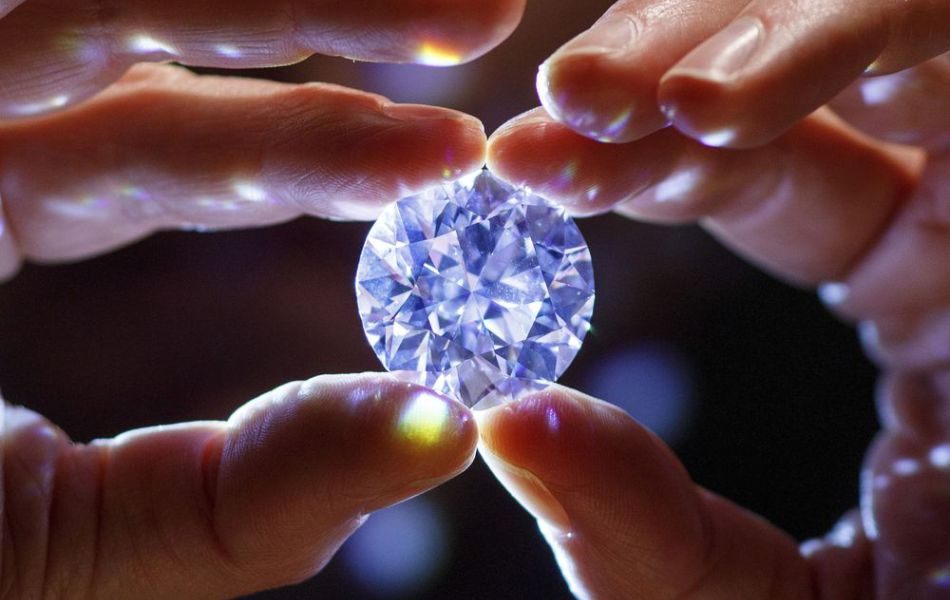
Diamond terms are specialized concepts used to describe
Diamond terms according to the 4C standard
1. Carat
Carat is the unit of weight for diamonds, where 1 carat is equivalent to 0.2 grams. The larger the carat, the rarer and more valuable the diamond, but it does not completely determine its beauty.
Point is a smaller unit of carat, with 1 carat equaling 100 points. This term is often used for small-weight diamonds.
2. Color
Color refers to the degree of absence of color in a white diamond. The less colored a diamond is, the rarer and more valuable it is.
3. Clarity
Clarity indicates the purity of a diamond based on the number, size, and location of inclusions. The higher the clarity, the more transparent the diamond.
4. Cut
Cut is the quality of a diamond's cut, which determines its light reflection capability. This is the factor that most strongly influences a diamond's sparkle.
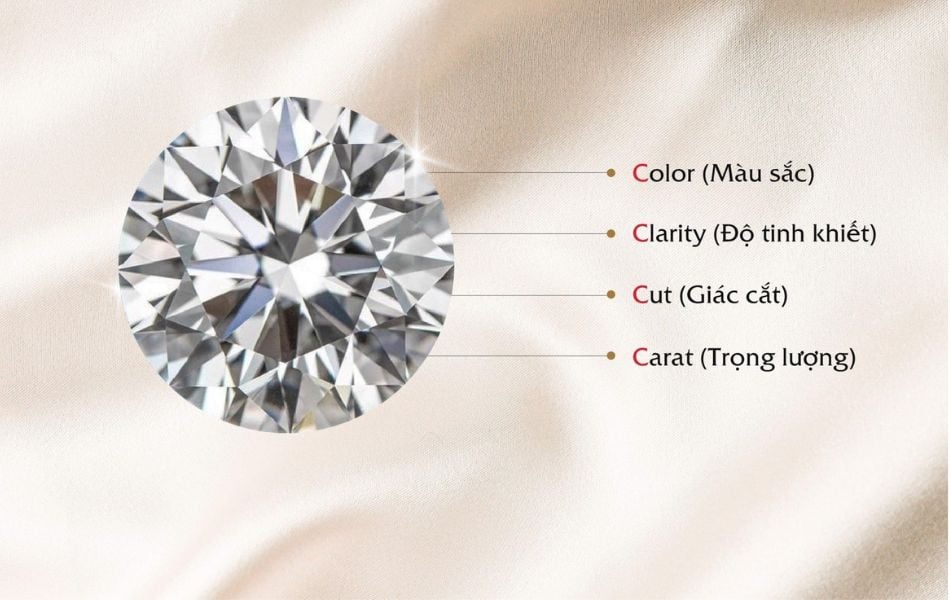
Diamond terms according to the 4C standard
Diamond shape terms (Shape)
5. Shape
Shape is the external form of the diamond after it has been cut. Shape affects style and aesthetic perception.
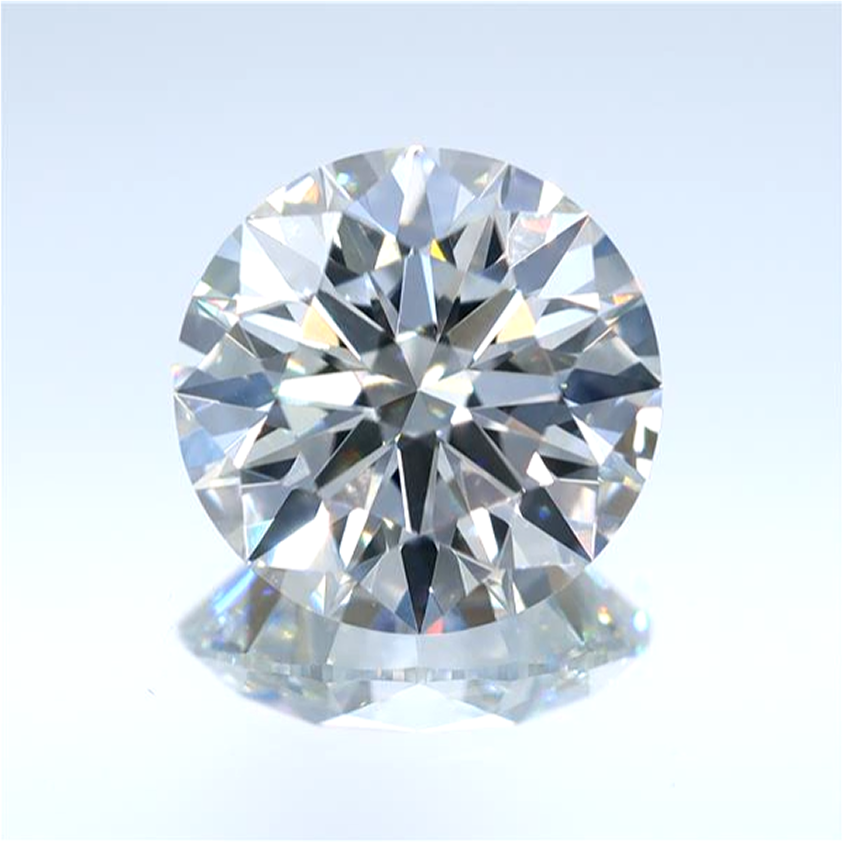
6. Round Brilliant
The round shape is the most popular, with the best light reflection. It is a common choice for diamond rings.
7. Princess
Square or rectangular, with a modern style. Princess cut has a sparkle level second only to round.
8. Cushion
Square with rounded corners, offering a classic feel. Cushion cut creates a soft and luxurious impression.
9. Oval
The oval shape makes the diamond appear larger than its actual weight. Suitable for those who prefer an elegant shape.
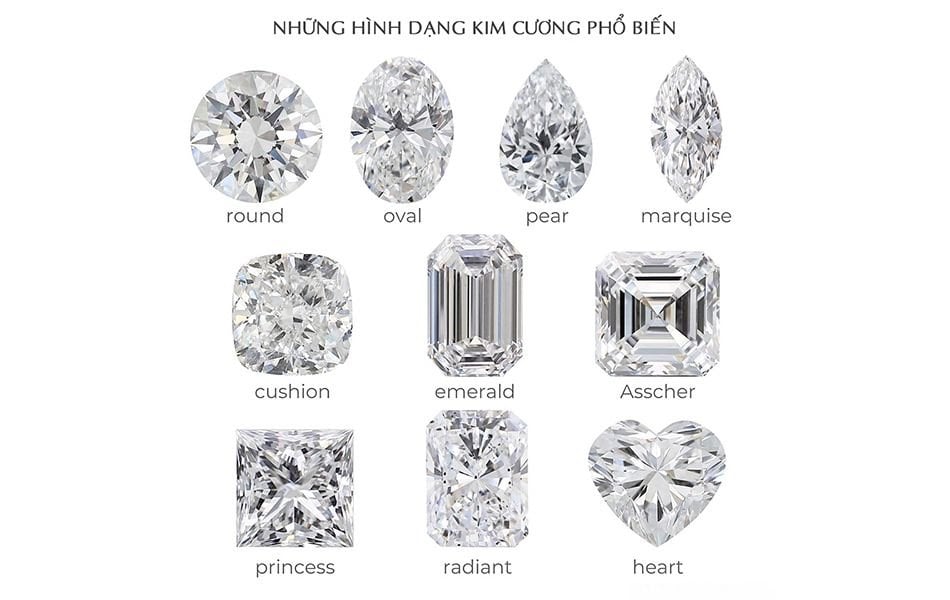
Diamond shape terms (Shape)
Diamond structure terms
10. Table
Table is the largest flat facet on the top of the diamond. The table proportion affects the ability to capture and reflect light.
11. Depth
Depth is the overall depth of the diamond expressed as a percentage. A suitable depth helps the diamond to be bright and balanced.
12. Crown
Crown is the upper part of the diamond, located between the table and the girdle. The crown influences the fire.
13. Pavilion
Pavilion is the lower part of the diamond. This is the area that reflects light back to the viewer's eye.
14. Girdle
Girdle is the band that encircles the diamond. A girdle that is too thin or too thick affects both durability and aesthetics.
15. Culet
Culet is the bottom point of the diamond. A culet that is too large can cause light leakage.
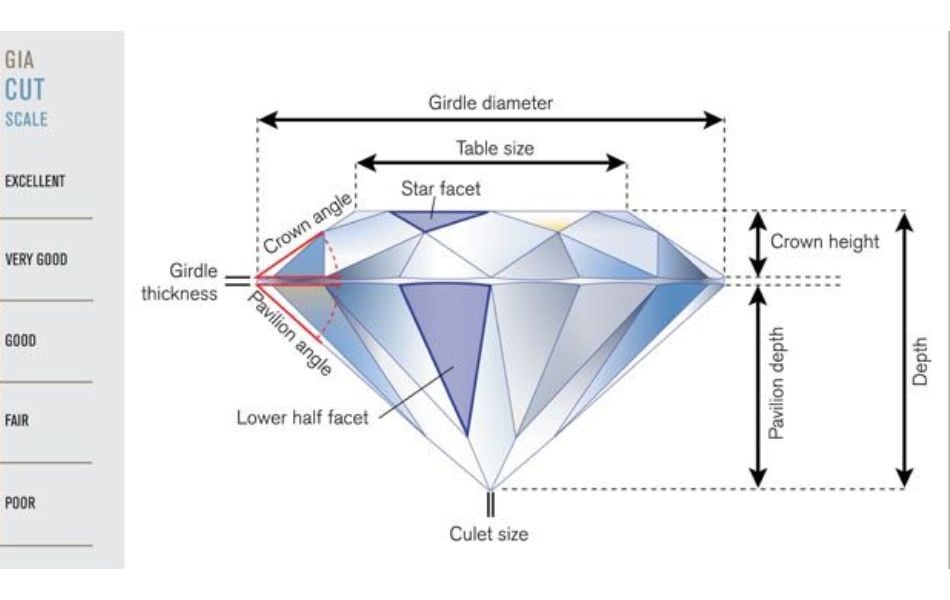
Diamond structure terms
Light effect terms
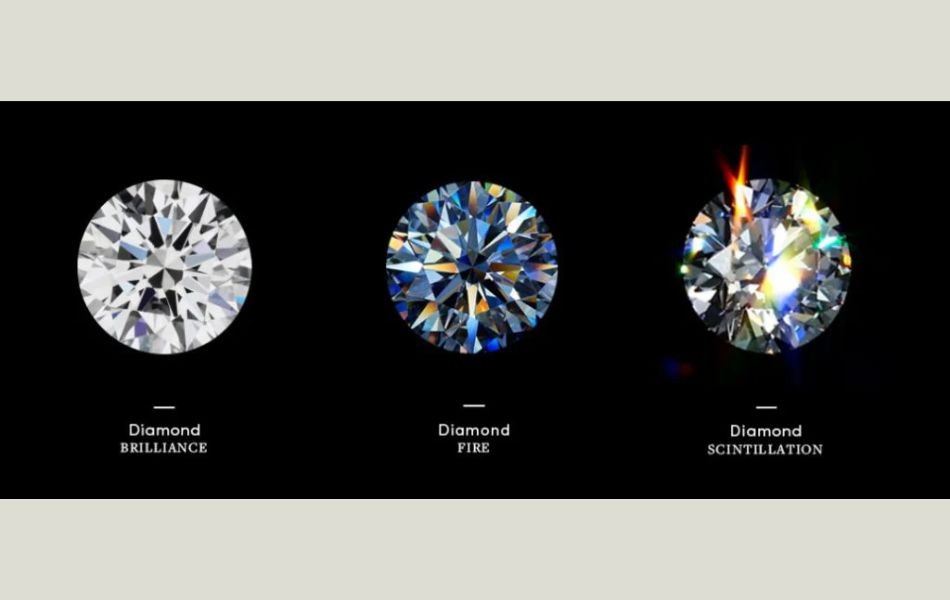
16. Brilliance
Brilliance is the white light reflected from the diamond. This is the factor that creates the "brightness" of the stone.
17. Fire
Fire is the colorful flash when light is dispersed. Fire makes the diamond vibrant and lively.
18. Scintillation
Scintillation is the flickering effect of light when the diamond moves. This effect depends on the cut.
Light effect terms
Fluorescence terms
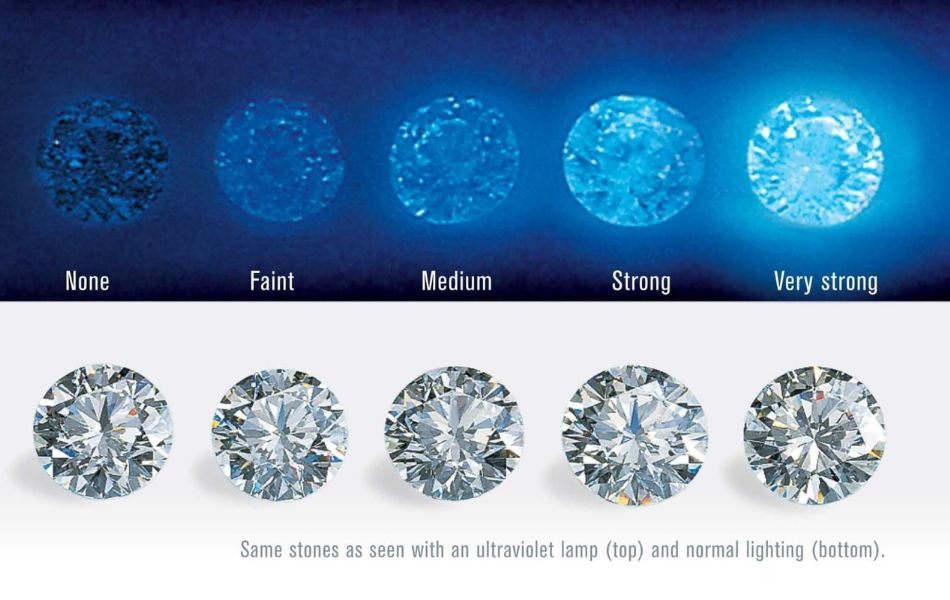
19. Fluorescence
Fluorescence is the phenomenon where diamonds glow under UV light. Some levels of fluorescence can affect color when viewed in daylight.
20. UV (Ultraviolet Light)
UV is ultraviolet light found in sunlight and specialized lamps. Fluorescence only appears when the diamond is exposed to a UV light source.
21. Fluorescence Effect
Fluorescence Effect is the term referring to the impact of fluorescence on the diamond's appearance. This impact depends on the level of fluorescence and color grade.
22. Milky Appearance
Milky is the phenomenon where a diamond appears cloudy due to strong fluorescence. This is a factor that reduces diamond quality and value.
Fluorescence terms
Diamond certification terms
23. GIA
GIA is the world's most reputable diamond appraisal organization. GIA certification is considered the gold standard of the industry.
24. IGI
IGI is a popular appraisal organization in Asia and Europe. It is often used for jewelry diamonds and lab-grown diamonds.
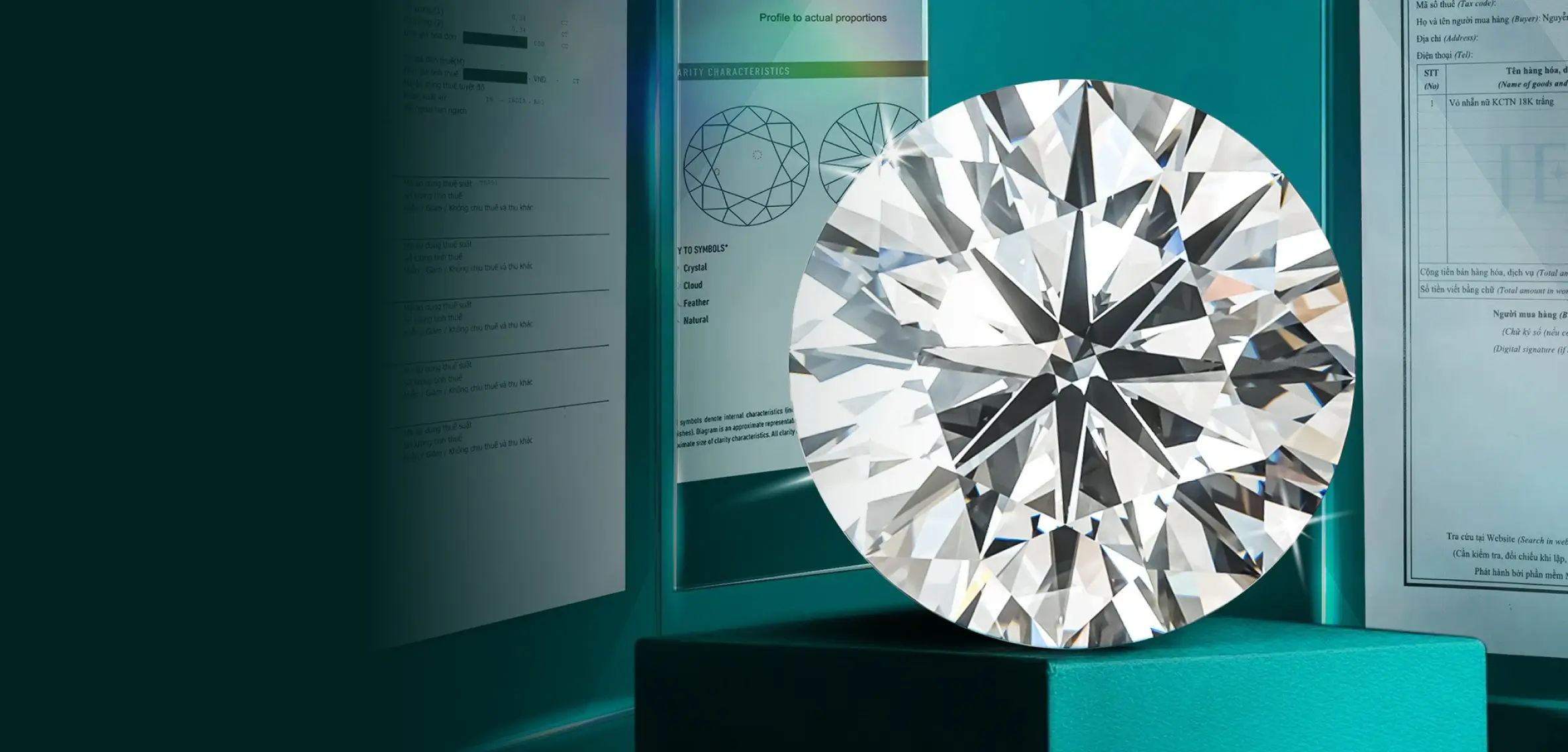
25. Diamond Certificate
Diamond Certificate is a document that fully describes the characteristics of the diamond. It serves as the basis for determining value and quality.

Diamond certification terms
Refer to the diamond price list for preferential prices at Jemmia or contact 0838 353 333 for consultation.
Diamond classification terms
26. Natural Diamond
Natural diamonds formed deep within the earth over billions of years. They have high value and natural rarity.
27. Lab-grown Diamond
Diamonds created in a laboratory with the same physical and chemical structure as natural diamonds. They are lower in price and environmentally friendly.
See more: What is a Natural Diamond? Its Meaning and Value?

Diamond classification terms
Jewelry application terms
28. Solitaire
Solitaire is a jewelry style that uses only one central diamond. It has a minimalist and luxurious style.
29. Halo
Halo is a design style that surrounds the main diamond with smaller diamonds. It makes the center stone appear larger and more prominent.
30. Setting
Setting is the way a diamond is mounted onto jewelry. The setting affects safety and overall aesthetics.

Jewelry application terms
Understanding each diamond term helps buyers accurately assess the quality, value, and beauty of a diamond. This is essential knowledge if you want to buy, sell, consult, or invest in diamonds professionally.