

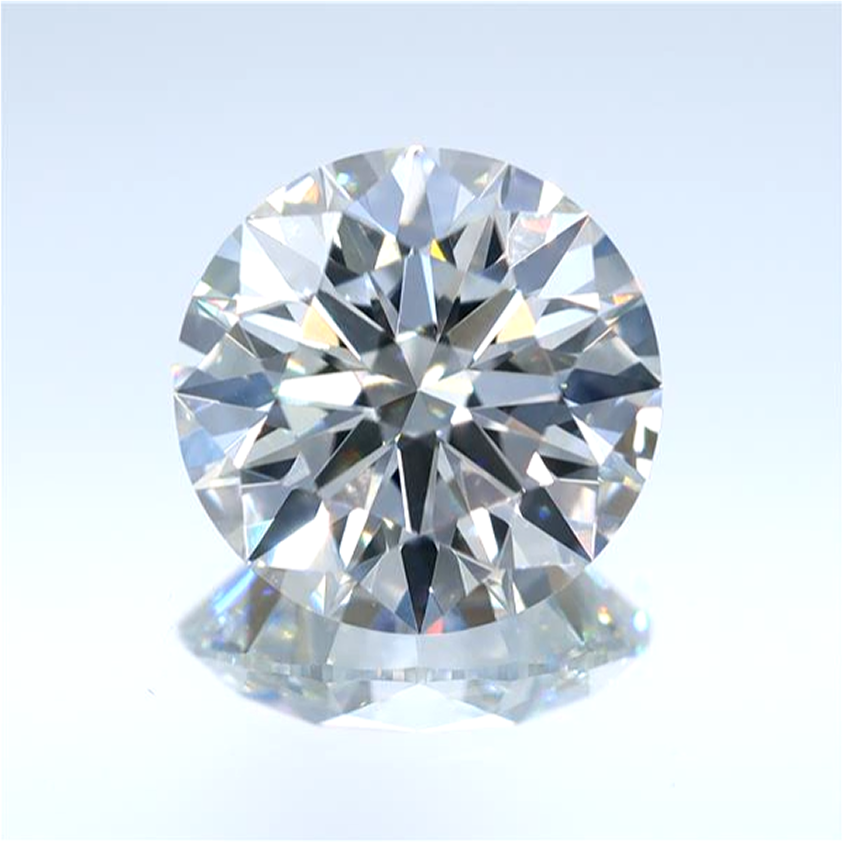












Do diamonds conduct electricity? Detailed analysis of the reasons
Key Takeaways
- Do diamonds conduct electricity or not is a question many people wonder about, as this gemstone conducts heat extremely well but does not transmit electricity. The following article from Jemmia will help...

Do diamonds conduct electricity or not is a question many people wonder about, as this gemstone conducts heat extremely well but does not transmit electricity. The following article from Jemmia will help you understand the reason from the molecular structure of diamonds, and explore whether there are any types of diamonds that can conduct electricity.
Do diamonds conduct electricity?
Diamonds do not conduct electricity because diamond is an electrical insulator with a resistivity of ≥ 10¹⁶ Ω·cm. The direct cause is the wide band gap of about 5.5 eV, twice that of silicon. Therefore, at normal temperatures, almost no electrons have enough energy to "jump" to the conduction band.

Diamonds do not conduct electricity because diamond is an electrical insulator with a resistivity of ≥ 10¹⁶ Ω·cm
Why don't diamonds conduct electricity? Molecular structure analysis
To explain why diamonds do not conduct electricity, it is necessary to understand their characteristic molecular structure:
- sp³ tetrahedral structure: Each C atom is covalently bonded to four neighboring C atoms, forming an extremely stable 3D network.
- No free electrons: The four valence electrons of carbon are "locked" in sigma bonds; unlike graphite (sp²) which has delocalized π-electrons that conduct electricity.
- Wide band gap: The energy required to break an electron free from a bond is approximately 5.5 eV, far exceeding thermal energy (0.026 eV at 25 °C).
Because there are no free charge carriers, pure diamond almost does not allow electric current to pass through.
See more: What is the chemical formula of diamond?
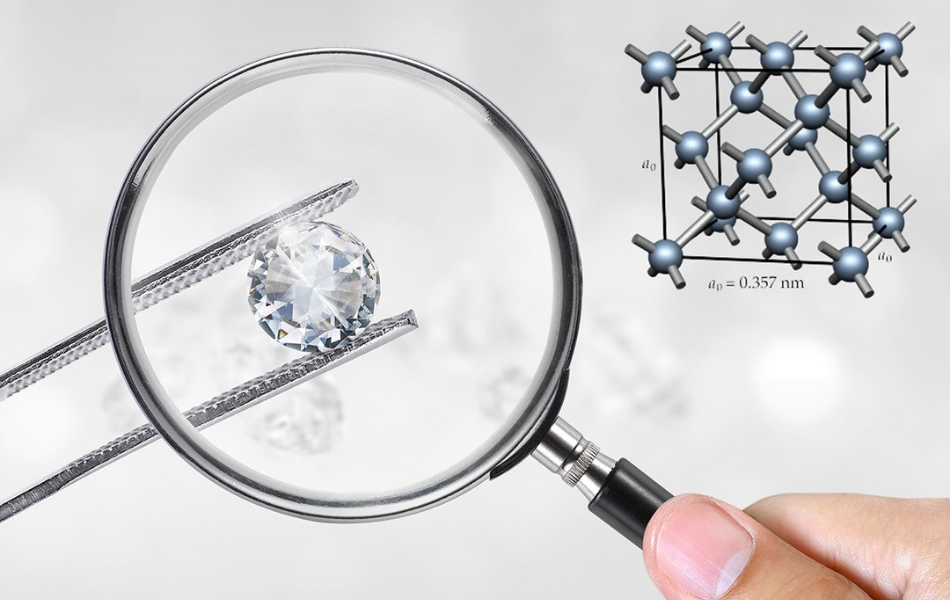
Diamonds have no free charge carriers, so they do not conduct electricity.
Why do diamonds not conduct electricity but conduct heat extremely well?
An interesting paradox of diamonds is that although they do not conduct electricity, they conduct heat extremely effectively. Due to the following reasons:
- Super strong covalent bonds combined with light atomic mass lead to very fast propagation of lattice vibrations (phonons).
- Low lattice disorder leads to minimal phonon scattering, resulting in a thermal conductivity of ~ 2,200 W/m·K – the highest naturally occurring.
- Different mechanism: In metals, electrons carry both charge and heat; in diamonds, phonons carry almost all the heat, while electrons are tightly bound and do not contribute to electrical conduction.

Diamonds do not conduct electricity but conduct heat extremely well.
Are there any types of diamonds that conduct electricity?
Although pure diamonds do not conduct electricity, some special variations can conduct electricity due to impurities.
- Boron-doped diamond (BDD): Boron atoms (3 valence electrons) create p-type holes, turning diamond into a semiconductor; high boron concentrations can make the material superconductive below ~4 K.
- Natural blue diamonds (Example: Hope Diamond): The blue color is due to trace amounts of boron (a few ppm); enough to make the diamond weakly conductive at room temperature.
- Phosphorus/sulfur-doped diamonds: CVD experiments have created n-type (P) diamonds for high-power electronic devices; conductivity is still low but is being improved.

Types of diamonds that can conduct electricity
From the article, you must have found the answer that diamonds do not conduct electricity. If you love the perfect beauty of diamonds and want to learn more interesting knowledge, please visit the website Jemmia Diamond to discover the beauty of diamonds and perfect diamond jewelry.