













9 ways to identify real or fake white gold simply at home
Key Takeaways
- White gold jewelry has always been popular due to the sophistication and class it brings. However, the current market has many places offering fake or low-quality gold, leaving buyers uneasy, especially with...

White gold jewelry has always been popular due to the sophistication and class it brings. However, the current market has many places offering fake or low-quality gold, leaving buyers uneasy, especially with high-end jewelry lines like diamond rings or white gold rings with gemstones. To avoid buying the wrong item, let's join Jemmia to learn 9 quick and accurate ways to identify real and fake white gold below!
The current situation of white gold counterfeiting
The increasing demand for white gold has led to the appearance of many fake gold products for profit. The counterfeiting techniques are becoming increasingly meticulous and difficult to distinguish.
Typically, fake gold is not just simple metal but a combination with metals like nickel, iron, copper, and especially tungsten - a substance often mixed with gold powder to create a shine like real gold. Due to its low cost, tungsten becomes a substitute for white gold to increase profits.
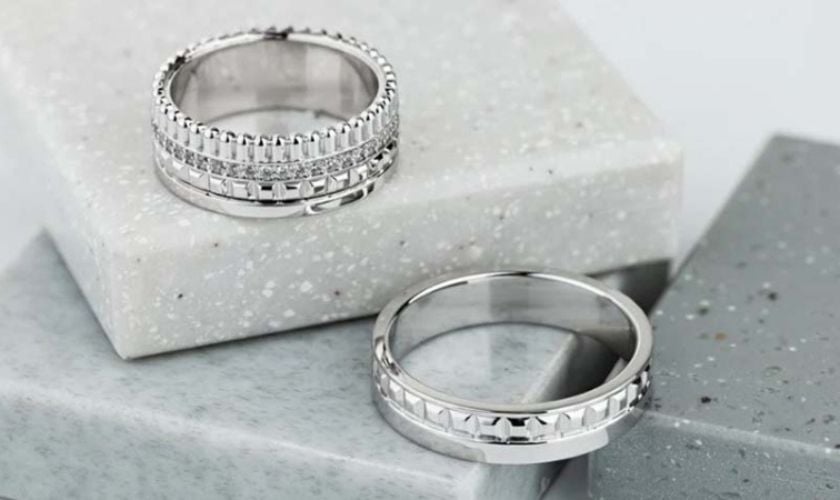
9 simple ways to identify real or fake white gold at home
Testing white gold with a magnet
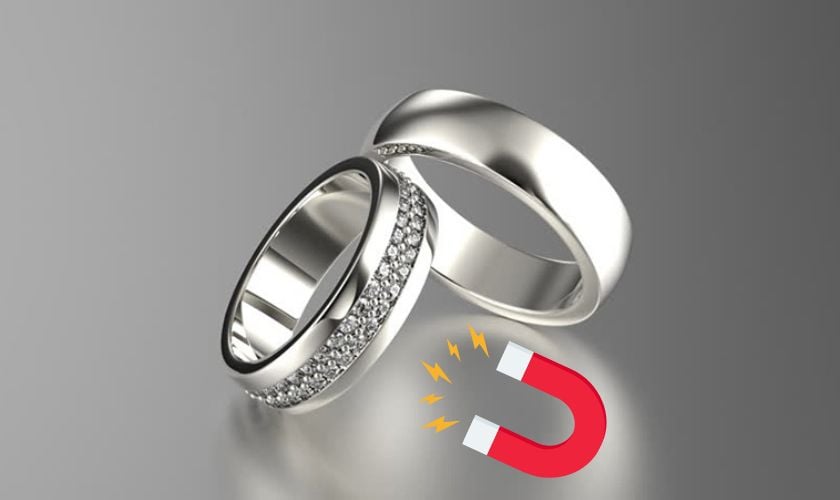
Checking if white gold is real or fake with a magnet is a simple method you can perform at home. Real gold is a non-magnetic metal, so if you use a magnet, you can determine some of the properties of the jewelry.
To do this, prepare a strong magnet, such as a neodymium magnet, and bring it close to the white gold jewelry. If the item is not attracted to the magnet, this is an indication that the jewelry may be real white gold or made of non-magnetic precious metal. Conversely, if the item is attracted, it may contain other magnetic metals and may not be real gold or have a low gold content.
However, it should be noted that this method does not definitively confirm the purity of white gold but only helps to identify the presence of magnetic metals.
Biting to test white gold
Biting to test white gold is a traditional method often used to check the purity of gold. However, this method is not really suitable for testing white gold for several reasons. Pure gold is very soft and easily dents when bitten, but white gold is an alloy of gold and other metals like nickel or palladium, making it harder and less likely to deform when bitten.
Furthermore, biting white gold can be harmful to teeth and does not provide accurate results on the purity or authenticity of the gold. This method is primarily effective with pure gold rather than alloys.
Testing white gold with fire
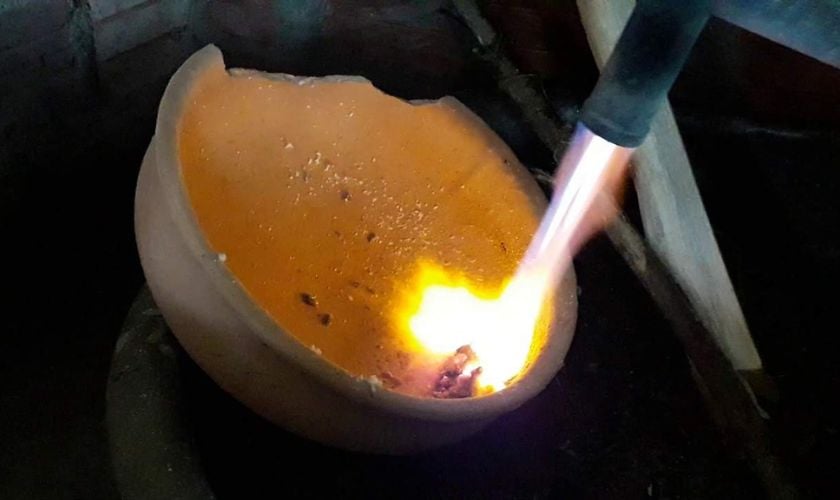
Testing white gold with fire is a folk method but requires caution as it can damage the jewelry. To do this, use a lighter or a mini torch to heat the jewelry for about 1-2 minutes and observe the changes. If it is real white gold, the item will not discolor or will only be slightly oxidized, and can be easily polished again.
Conversely, if the jewelry turns black, tarnishes, or peels, it may be a cheap alloy or gold-plated metal. However, this method carries the risk of damaging jewelry, especially pieces with gemstones, and does not guarantee high accuracy. Therefore, it is recommended to take the jewelry to reputable appraisal centers for inspection with specialized equipment.
See also: What is 999 Gold? Is 999 Gold the same as 24K Gold?
How to identify white gold by engravings and numbers
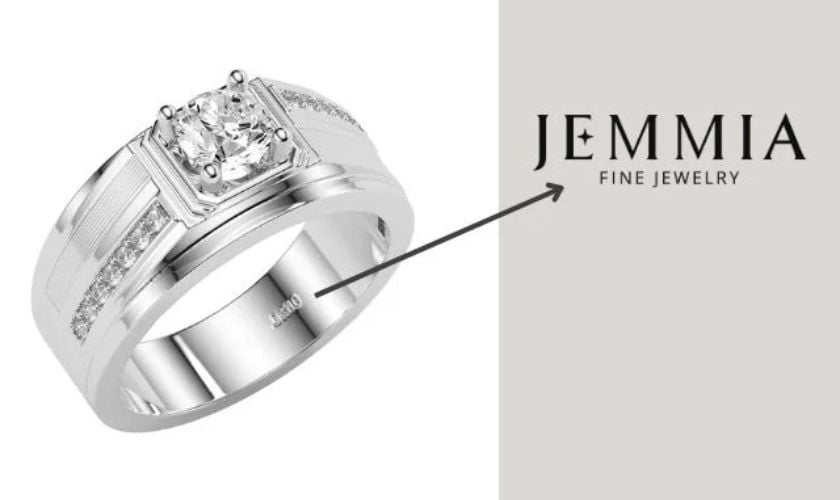
White gold from reputable vendors is usually marked with symbols or numbers to confirm its quality and origin. To check, you can use your naked eye or a magnifying glass to examine these markings. If the engravings and numbers are clear, sharp, uniform, and exquisite, this is a sign of real white gold. Conversely, if the markings are uneven, the engravings are rough, and lack refinement and aesthetic appeal, it is likely fake white gold, produced carelessly to deceive buyers.
Using acid
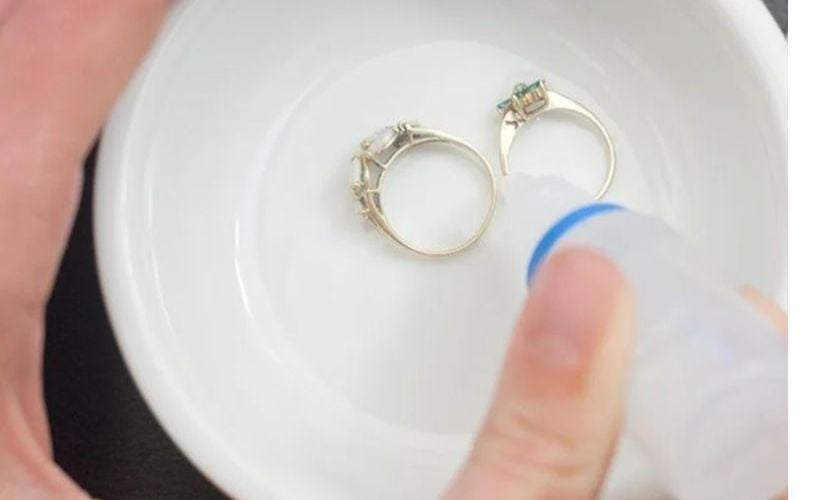
Using acid is an effective method to test real or fake white gold at home. Some acids recommended by experts include Nitric Acid, Sulfuric Acid, and Hydrochloric Acid. Other metals will react when exposed to acid, while pure gold will not react.
If you drip acid onto the surface of the item and see signs such as milky white, brown colors appearing, tiny bubbles or white foam, then it is a sign of fake gold. Pure gold will not react, but white gold with a low karat may show some reaction, albeit minor. Therefore, you can assess whether gold is real or fake based on the chemical reaction that occurs when using acid.
Using a floating test
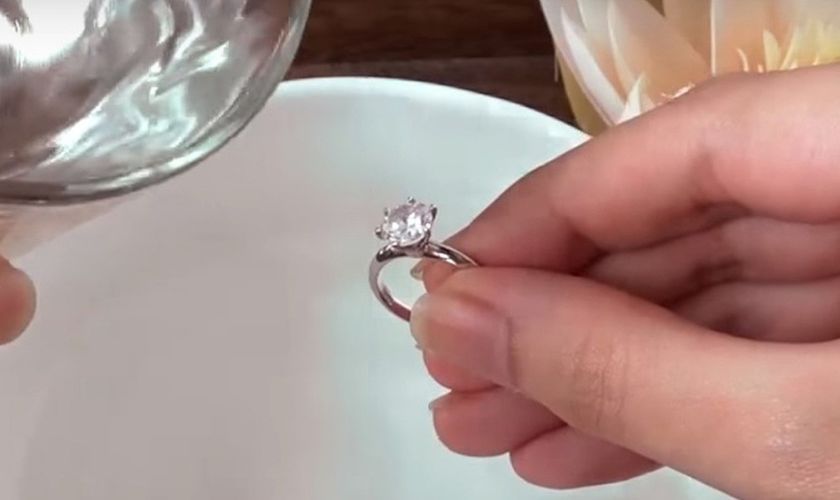
The floating test method for white gold is simple. You just need a large cup of water, drop the gold jewelry into it, and observe. Real white gold will sink to the bottom of the cup quickly, while fake white gold often floats with small bubbles appearing. This is a common testing method, but not 100% accurate because the results can depend on the amount of water, the shape, and the weight of the jewelry. For the most objective assessment, you should adjust these factors accordingly.
Using ceramic
The method of using ceramic to identify real or fake white gold is a simple way many people use. White gold, although mixed with other metals, still retains a considerable amount of pure gold. When you rub white gold on the surface of an unglazed ceramic piece, if a yellow streak appears, this is a sign of real white gold. Conversely, if a black streak appears, it is likely fake white gold.
However, this method has some limitations. Fake white gold often has only a metal core inside, while the outer layer is plated with a white color that resembles real white gold. When rubbed, this plating will peel off, revealing the metal core inside, making the results not entirely accurate and potentially damaging the jewelry's surface. Therefore, this method is not recommended for jewelry, as it can affect the product's external appearance. However, if you are suspicious about the quality of the product, using ceramic to test is still a way to determine real or fake gold.
Using vinegar
Testing white gold with vinegar is a simple but not entirely accurate method to determine real or fake gold. You just need to drop a few drops of white vinegar onto the surface of the white gold jewelry and observe the reaction. If it is real gold, the vinegar will not cause a noticeable reaction and the gold surface will retain its color. However, if it is fake gold, especially plated gold, vinegar can cause the plating to peel, change color, or leave black streaks. However, this method is not always accurate because some white gold alloys do not react strongly with vinegar. Furthermore, vinegar can damage the surface of jewelry, especially those with gold plating. Therefore, this is only a simple testing method, but for accurate testing, you should take the jewelry to reputable jewelry stores for inspection with specialized equipment.
Identifying by light
Using light to identify white gold is a simple method you can apply. When placing white gold under light, you will be able to observe the characteristic signs of the jewelry. Pure gold will not reflect light in a special way and will not have any unusual phenomena when illuminated. Conversely, fake white gold or alloys may react differently to light, creating unusual light or colors. However, this method can only help identify partially and is not entirely accurate.

Above are 9 ways to identify white gold that Jemmia has introduced to you. We hope the information Jemmia shares will help you distinguish between real and fake white gold. Thank you for following the article. If you want to see models of white gold rings, white gold necklaces, white gold earrings, please visit the Jemmia Website now!
See more: Beautiful natural diamond wedding rings that will make everyone admire.